On January 29-30, 2018, Dr.
Search Results
Dr. Brian Mandell to Present at "It's Go Time!" Lesson Study Conference in New York
November 6, 2017
Dr. Brian Mandell will lead a workshop at the “It’s Go Time! Science for All,” Conference in New York on November 7th, 2017. The conference in Mattydale will focus on the new standards but also incorporate a research-driven professional development practice called "Lesson Study," which is generally defined as a collaborative process for planning, analyzing, and continuously improving instructional practices.
At the conference, teachers and students from four Central New York districts will be participating in lessons aligned with the new state learning standards and based on curriculum modules developed by the Smithsonian Science Education Center. As the lessons unfold, conference participants will stand close by, observing individual students and taking notes on how each student’s learning progresses. The event marks the second year of a unique collaboration between the Onondaga-Cortland-Madison Board of Cooperative Educational Services (OCM BOCES) and the Syracuse University School of Education. Support is provided by a 100kin10 grant to the Smithsonian Science Education Center and from several local teacher centers: Central New York/Oswego County; Jamesville DeWitt/Syracuse University; West Genesee/Syracuse University; Syracuse; and Cayuga-Onondaga.
Read more at http://www.ocmboces.org/teacherpage.cfm?teacher=3307
"It's Go Time!" Lesson Study Conference | New York
November 07, 2017
Dr. Brian Mandell will lead a workshop at the “It’s Go Time! Science for All,” Conference in New York on November 7th, 2017. The conference in Mattydale will focus on the new standards but also incorporate a research-driven professional development practice called "Lesson Study," which is generally defined as a collaborative process for planning, analyzing, and continuously improving instructional practices.
SSEC Experts in STEM Education–Katie Gainsback and Brian Mandell–to Present at STEM Innovations Summit in Wisconsin
November 6, 2017
On November 16, 2017, Einstein Project is partnering with the Smithsonian Science Education Center and Carolina Biological to bring a free summit for Wisconsin administrators, school superintendents, curriculum directors and educators. Held at the Weidner Center (UW-Green Bay), this event presents STEM Talks by the Wisconsin Lieutenant Governor, a local CEO, Brian Mandell and Katie Gainsback as guest speakers from the Smithsonian, and a panel discussion from Wisconsin Department of Public Instruction. There will also be a Makerspace presentation and panel discussion. To register for the event go to: http://einsteinportal.2bsolutions.net/public-events/
STEM Innovations Summit | Wisconsin
November 16, 2017
On November 16, 2017, Einstein Project is partnering with the Smithsonian Science Education Center and Carolina Biological to bring a free summit for Wisconsin administrators, school superintendents, curriculum directors and educators. Held at the Weidner Center (UW-Green Bay), this event presents STEM Talks by the Wisconsin Lieutenant Governor, a local CEO, Brian Mandell and Katie Gainsback as guest speakers from the Smithsonian, and a panel discussion from Wisconsin Department of Public Instruction. There will also be a Makerspace presentation and panel discussion.
STEM Professional Development Expert Katie Gainsback Delivers Talk at International Gender Summit
November 6, 2017
Katie Gainsback, STEM Professional Development Expert at the Smithsonian Science Education Center, delivered a talk at the 2017 Gender Summit on "Diversifying the STEM Community of Tomorrow: Educational, Extracurricular, and Community Influences". The Gender Summit is a platform for dialogue where scientists, policymakers, gender scholars and stakeholders in science systems examine new research evidence showing when, why, and how biological differences and socio-cultural differences between females and males impact outcomes. The aim is to reach consensus where improvements to science knowledge and science practice are needed and who should take action.
SSEC Director, Carol O'Donnell, to Keynote at ETH Zurich University 2018 Global Talent Summit
November 6, 2017
Smithsonian Science Education Center Director, Dr. Carol O'Donnell, has been invited to present at the Global Talent Summit 2018, hosted by ETH Zurich University in its historic campus in Zurich, Switzerland. The Global Talent Summit 2018 will bring together multi-disciplinary stakeholders from the private sector, policy, academia/K-12 STEM education, and innovation to discuss the trends and solutions for the future of work and education. It its 5th year, the Global Talent Summit has convened over 2000 strategists, key opinion leaders, and relevant stakeholders to shape the future of talent through education, innovation, and recruitment. To learn about the other speakers, read publications on this important topic facing STEM educators today, and register for the event, go to: http://globaltalentsummit.org/
SSEC Director Carol O'Donnell to Keynote at ETH Zurich University 2018 Global Talent Summit | Zurich, Switzerland
January 20, 2018
Smithsonian Science Education Center Director, Dr. Carol O'Donnell, has been invited to present at the Global Talent Summit 2018, hosted by ETH Zurich University in its historic campus in Zurich, Switzerland. The Global Talent Summit 2018 will bring together multi-disciplinary stakeholders from the private sector, policy, academia/K-12 STEM education, and innovation to discuss the trends and solutions for the future of work and education.
Autumn Splendor: Why Do Leaves Change Color in the Fall?
Wednesday, November 8, 2017
What is your favorite thing to do in autumn? Go on a hayride? Walk through a pumpkin patch or an apple orchard? Watch leaves dance around you?
Autumn is a beautiful and fun season for all ages. We can observe a lot of changes in autumn—the air becomes crisp, the evenings grow longer, and leaves’ dazzling colors emerge. We know autumn is here when the bright green summer landscape changes to reveal brilliant reds, oranges, yellows, and golds. But leaves are not on trees just to make them pretty. Trees need leaves to keep them alive!
Leaf or Needle?
SSEC Director Carol O'Donnell Invited to Give a Talk at Meeting German Leibniz Association
November 10, 2017
SSEC Director, Carol O'Donnell, presented on the work of the Smithsonian Science Education Center at a two-day meeting, "Aim, Scope, and Challenges of Research Museums: An exchange between the Smithsonian Institution and the Leibniz Association " on 30-31 October. Organized by Scott Miller, Deputy Undersecretary for Collections and Interdisciplinary Support (DUSCIS), the meeting brought together a number of Smithsonian staff and representatives from a number of the 91 institutional members of the Leibniz Association. The Leibniz Association is a union of German non-university research institutes from various branches of study and has a number of similarities to the Smithsonian Institution. O'Donnell's talk focused on the work of SSEC's LASER program and its impact on the German education program called "TuWAS".
SSEC's Dr. Amy D'Amico Serves as Technical Advisor for "Portable Laboratories" Initiative in Chile
November 15, 2017
Dr. Amy D'Amico, Division Director for Professional Services at the Smithsonian Science Education Center, was a technical advisor for the initiative called "Portable Laboratories" of the Allende Connelly Foundation and the Institute of Biomedical Sciences of the Faculty of Medicine of the University of Chile. This initiative brings experiential learning from the Portable Laboratory to public schools of the Metropolitan Region so that students can engage in inquiry-based science education firsthand. This initiative achieved support of the Ministry of Education in 2016 and is now in seven regions of the country with the support of nine universities. In addition to Dr. D'Amico, who represented science education in the United States, other technical support came from colleagues in Italy and France.

Read more at:
http://www.uchile.cl/noticias/138587/escolares-de-regiones-e...
October in Review
Wednesday, November 15, 2017
Smithsonian Science Education Center National Advisory Board Dinner & Meeting
The Smithsonian Science Education Center held its Fall National advisory board events, which included a private tour of the National Museum of American History’s (NMAH) Spark Lab and presentations in their boardroom, a dinner at the National Academy of Science (NAS), and the semi-annual board meeting at the Smithsonian Institution Traveling Exhibition Services (SITES).
Diplomatic Courier Moderates IMF’s New Economy Talks on the Future of Work
November 18, 2017
At the recent International Monetary Fund (IMF) Annual Meeting in Washington, DC the Diplomatic Courier moderated two New Economy Forum discussions on the future of work, in continuation of its work advancing conversation on the subject through the Global Talent Summit, convened annually to “look at the technological, economic, socio-economic, and political dimensions of a post-employment world.”
In these “New Economy Talks”, Diplomatic Courier Chief Ana C. Rold spoke with venture capitalist Scott Hartley and Smithsonian Science Education Center Director Carol O’Donnell about how they anticipate automation will impact the landscape of early childhood education and how we cultivate new talent to address looming global challenges including infectious disease, water scarcity, energy security, and climate change.
LASER Study Results Cited by STANYS Suffolk News
November 22, 2017
Glen Cochrane, Section Chair of the Science Teachers' Association of NY State (STANYS), cited the SSEC's LASER study when he discussed the New York State P-12 Science Learning Standards (NYSSLS) in his recent STANYS Suffolk News blog. The NYSSLS standards are grade banded with specific Performance Expectations, which gives teachers and curriculum designers guidance as to what students are expected to know and do at the end of instruction. As Glen indicates, "The challenge for STANYS and the science specialists across New York is how to support the transition of elementary teachers into NYSSLS. Elementary teachers feel they lack the background and confidence to dive into developing curriculum for science, and NYSSLS elementary programs need a good curriculum that maintains fidelity with the intent of the new standards. The elementary teachers and administrators need the training to recognize materials that are aligned and provide constructivist learning opportunities." SSEC is developing K-8 curriculum materials to support New York State teachers in implementing these new standards.
SSEC Director Shares Results of SSEC's LASER Study at Paris Conference Organized by La Main a La Pate
December 7, 2017
The diffusion of inquiry-based science teaching practices begs the question of how to properly evaluate this approach. To address this question, Dr. Carol O'Donnell, Director of the Smithsonian Science Education Center (SSEC), presented via video technology the results of the 5-year clustered randomized control trial (RCT) study of the SSEC's Leadership and Assistance for Science Education Reform (LASER) at the conference "Evaluation of Inquiry-based Teaching, Scientific Reasoning and Critical Thinking: State of Play and Prospects for the Future" held at the Simone and Cino Del Duca Foundation on December 7th, 2017 in Paris. Organized jointly by the Académie des Sciences - Institut de France and the Fondation La main à la pâte in partnership with the Department of Evaluation, Foresight and Performance (DEPP) of the Ministry of National Education and the network of Homes for science, this symposium brought together leading players in the field of research on the scientific reasoning of students, inquiry-based science education, evaluation of educational devices. It focused on identifying, disseminating and exploring tools and modalities for evaluating different aspects of inquiry-based science education, both at the classroom level and at the system level.
TEDxFoggyBottom Speaker Project Interview with Dr. Carol O'Donnell
Monday, December 11, 2017
Joseph Henry: the Father of Weather Forecasting (And the First Smithsonian Secretary!)
Monday, December 11, 2017
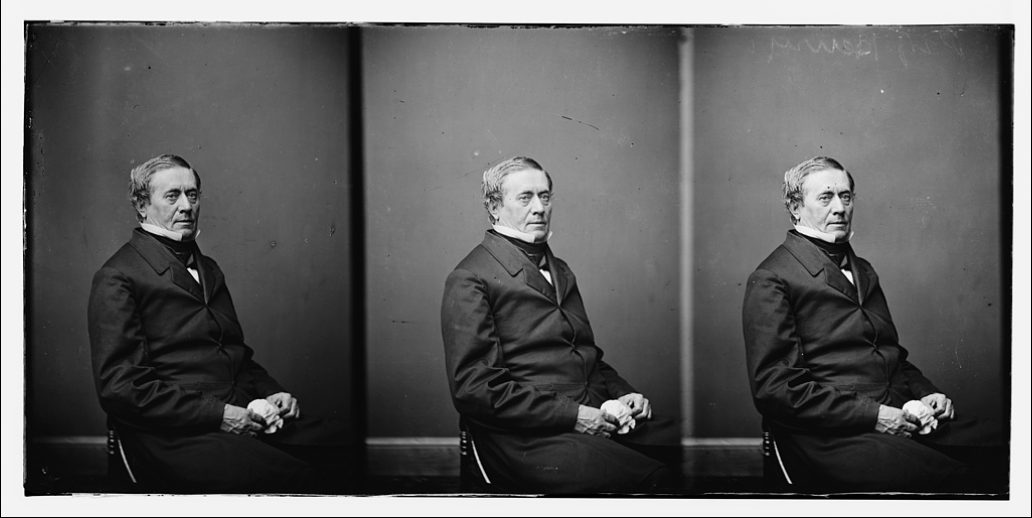 Joseph Henry Image: Library of Congress, Prints & Photographs Division, LC-BH824-4499
Your team has a soccer game Saturday, so you check a local news station’s website to see the weekend forecast. Radar images on multicolored maps show rain moving east, away from your town, and bands of clouds a few hundred miles west. It could mean rain, but the forecast for Saturday is partly cloudy with a high of 75 degrees. To get a better idea of the weather at the time of your game, you check the hour-by- hour forecast. Saturday, 10 a.m.: partly sunny and 68 degrees. Perfect.
In this age of 10-day weather forecasts and colorful digital displays of the entire country’s weather, it is hard to imagine not being able to find out tomorrow’s forecast. But before the mid-1800s, farmers and ship captains, whose lives and jobs depended on the weather, had little information to go on. They relied on clouds, winds, The Old Farmer’s Almanac, past experience in how the seasons flow, animal behavior signs, and their own arthritic bones to make predictions about the weather. But a scientist named Joseph Henry changed all of that.
CNN's Fareed Zakaria Cites Smithsonian Science Education Center in His Sunday Morning Show "GPS"
December 17, 2017
During his December 17, 2017 CNN GPS "What in the World" segment [go to: 10:26:54], Fareed Zakaria cited the Smithsonian Science Education Center when he discussed women in the workforce as a matter of economic productivity. According to Zakaria, a new report out by Standard & Poor's indicates that women who leave the workforce or never enter it have cost the United States greatly. S&P says that the U.S. economy would be $1.6 trillion bigger today if women in America entered and stayed in the workforce at the same rate women in Norway have. Zakaria notes, "Only 14 percent of women age 25 to 64 in the U.S. have studied a STEM field to begin with, a recent OECD report shows." The data Zakaria attributed to the Smithsonian Science Education Center comes from a July 2011 report from the US Department of Commerce, Economics and Statistics Administration, which projected that STEM jobs would grow by 17 percent from 2008-2018 compared to 9.8 percent growth for non-STEM occupations.
SSEC Director Carol O'Donnell Interviewed by Big Beacon Radio on VoiceAmerica
December 18, 2017
In this episode, host Dave Goldberg is joined by special guest Carol O'Donnell, Director of the Smithsonian Science Education Center (SSEC), a unit of the Smithsonian Institution that is dedicated to transforming the learning and teaching of science throughout the nation and world. Listen to Dave's podcast as he and Carol further explore the work of the Smithsonian Science Education Center, delve into the impact the SSEC has had on students, and discuss how higher education can implement the same principles for student success in STEM.
Article in Orange County Register Shows Local Use of LASER Model
December 18, 2017
In this article from the Orange County Register, Eddie Tabata, Executive Director of Science@OC, discusses how, for 15 years, the Santa-Ana based nonprofit, Science@OC, has been making an impact on science education in Orange County public schools, including those in Santa Ana where many students come from lower income households. Since Science@OC’s founding, more than 40,000 students — mostly 6-8th graders — have taken science classes using specially developed hands-on kits to get kids excited about science and discovery. Science@OC utilizes the nationally-recognized leadership development model called LASER from the Smithsonian Science Education Center. The program includes professional development, curriculum and materials support in the classroom, program evaluation and community partnerships.
SSEC's Teacher Leadership Summit: Attracting, Retaining, and Developing a Diverse STEM Teaching Workforce
December 18, 2017
What is the Winter Solstice?
Wednesday, December 20, 2017
If you have ever gone swimming in summer or had a snowball fight in winter, then you know something about seasons. Seasons are times on Earth that have very specific weather patterns and hours of daylight. Earth’s four seasons are spring, summer, fall, and winter. Seasons are caused by Earth’s changing position as it revolves around the Sun. Some people think that the seasons occur because of Earth’s distance from the Sun.
How Do Birds Navigate?
Thursday, January 4, 2018
If you were lost in the middle of the woods and could not see the Sun, you might use a compass to try to decide which direction to take. A magnetic compass needle lines itself up with Earth’s magnetic field and points roughly north and south: from that, you can figure out east and west, too. Because this works fairly well, people have been using magnetic compasses to find their way for about 1,000 years.
Carol O'Donnell Serves as Outside Adviser to Recently Released Pew Research Center Study on Women & Men in the STEM Workforce
January 9, 2018
Dr. Carol O'Donnell, Director of the Smithsonian Science Education Center, served as an Outside Adviser for a Pew Research Center report that was released on Jan. 9, 2018, which used a national representative survey to understand the issues women face in the STEM workforce. One of the key findings of the report is that while there has been an increased number of women earning degrees and working in the STEM industry, the new study found that women in STEM experience more discrimination at work than women in non-STEM fields.
To read the report go to: http://www.pewsocialtrends.org/2018/01/09/stem-acknowledgmen...
Smithsonian Science Education Center Highlighted in 100kin10's 2017 Trends Report: "10 Big Insights on Teaching, Learning, and STEM Education"
January 9, 2018
This "Trends Report" from the 100kin10 organization--of which the Smithsonian Science Education Center (SSEC) is a member--is the culmination of weeks of research, drawn from dozens of events and workshops, hundreds of conversations with experts and influencers, thousands of teacher surveys, and commissioned reviews exploring everything from social media trends to new teaching methods. The SSEC is highlighted in 100kin10's top insights from 2017 under the importance of promoting "Active STEM" learning.
Focus on the Stuff
When you combine digital tools with hands-on activities, learning sticks. A Smithsonian expert tells how.
November & December in Review
Monday, January 15, 2018
Paris Conference Organized by La Main a La Pate
Smithsonian Forms Strategic Alliance With Carnegie Learning to Build New STEM K-12 Products
January 19, 2018
Carnegie Learning, Inc., a research-proven leader of mathematics technology, curriculum and services, has announced a strategic alliance with the Smithsonian Institution. The Smithsonian has long been a leading developer of research-based science and engineering curriculum through its Smithsonian Science Education Center, which was established in 1985 to help transform the teaching and learning of science in the United States and throughout the world. The alliance will bring together two prestigious entities–the Smithsonian Institution and Carnegie Learning, which traces its roots back to Carnegie Mellon University–as they pursue their aligned missions to prepare students for success in the future economy–an economy that will depend heavily on students' knowledge and skills in science, technology, engineering, and mathematics (STEM).